The Psychology of a Great Event
This section focuses on harnessing fundamental social psychology—like herd mentality, reciprocity, and personal relevance—to turn passive attendees into active participants and engaged networkers.
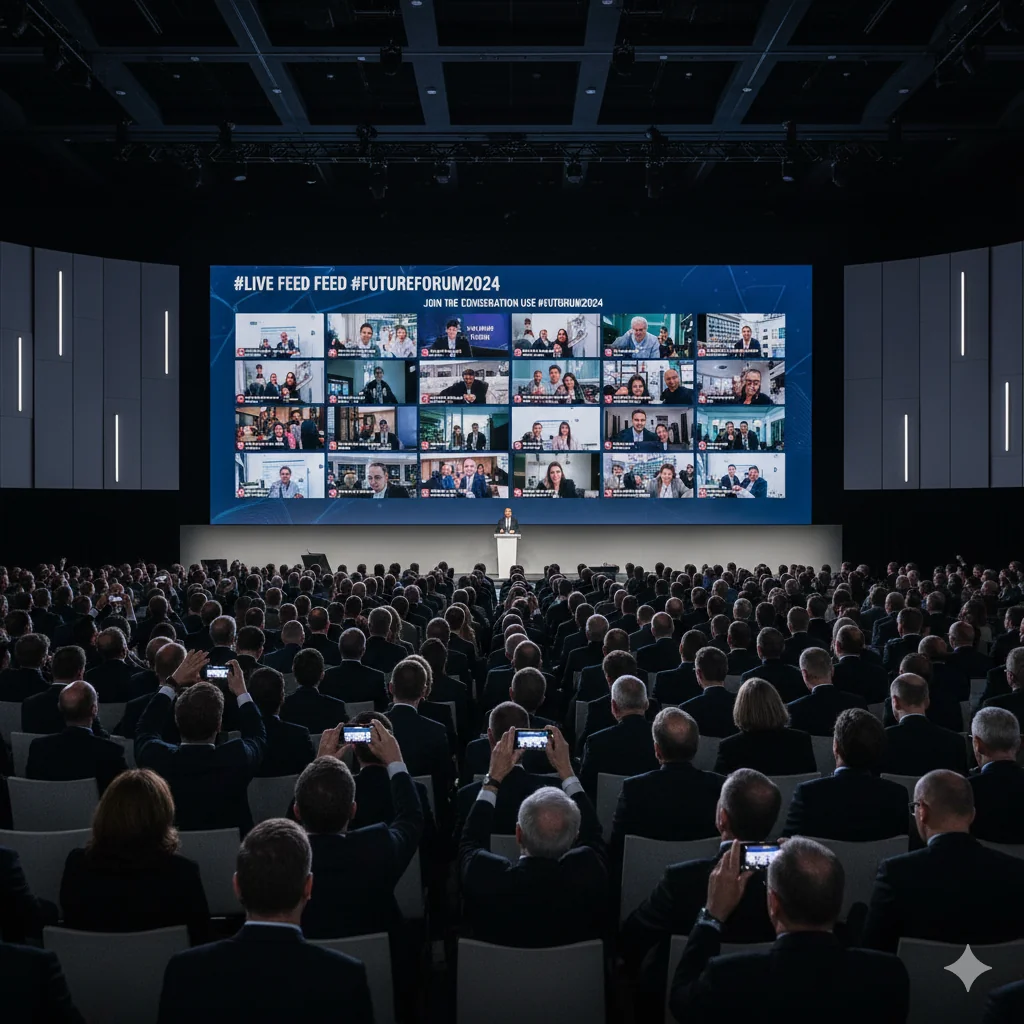
9. The "Spotlight Effect"
An integrated social feed displaying real-time posts and photos from attendees amplifies the buzz and encourages participation, making you feel part of the live conversation.
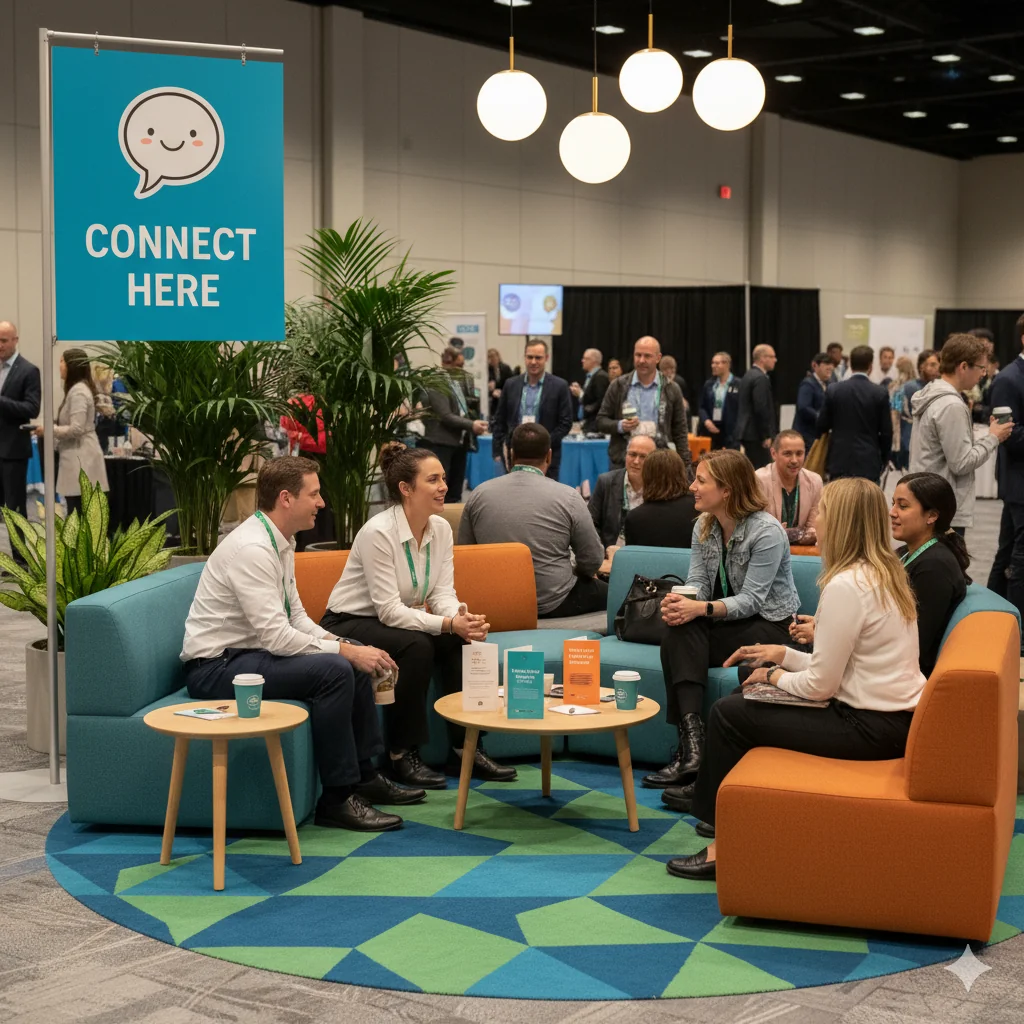
10. "Connect Here" Zones
Designate specific, visually appealing areas as "networking zones," complete with comfortable seating and conversation starters, to lower the barrier to social interaction.
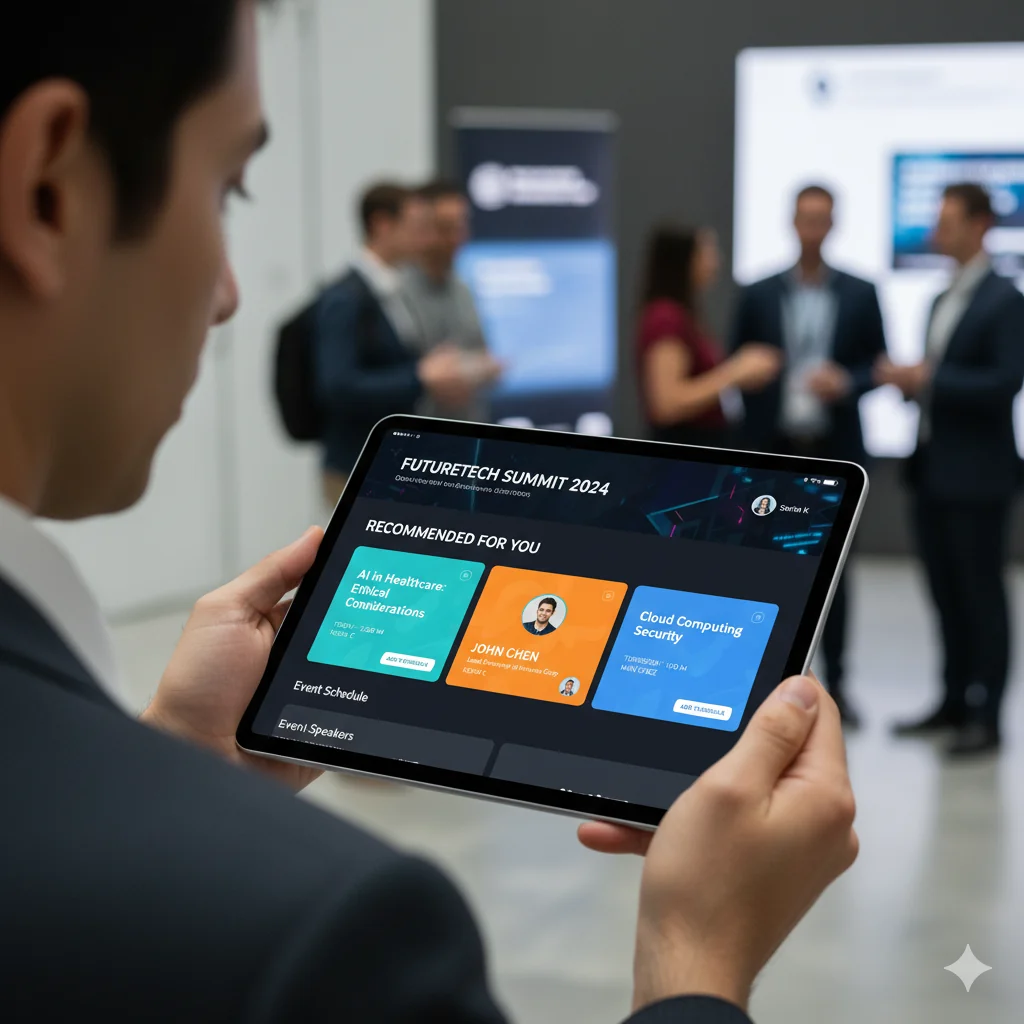
11. Personalized Recommendations
After setting up your profile, imagine receiving tailored recommendations for sessions and networking opportunities, making the event feel uniquely crafted for your interests.
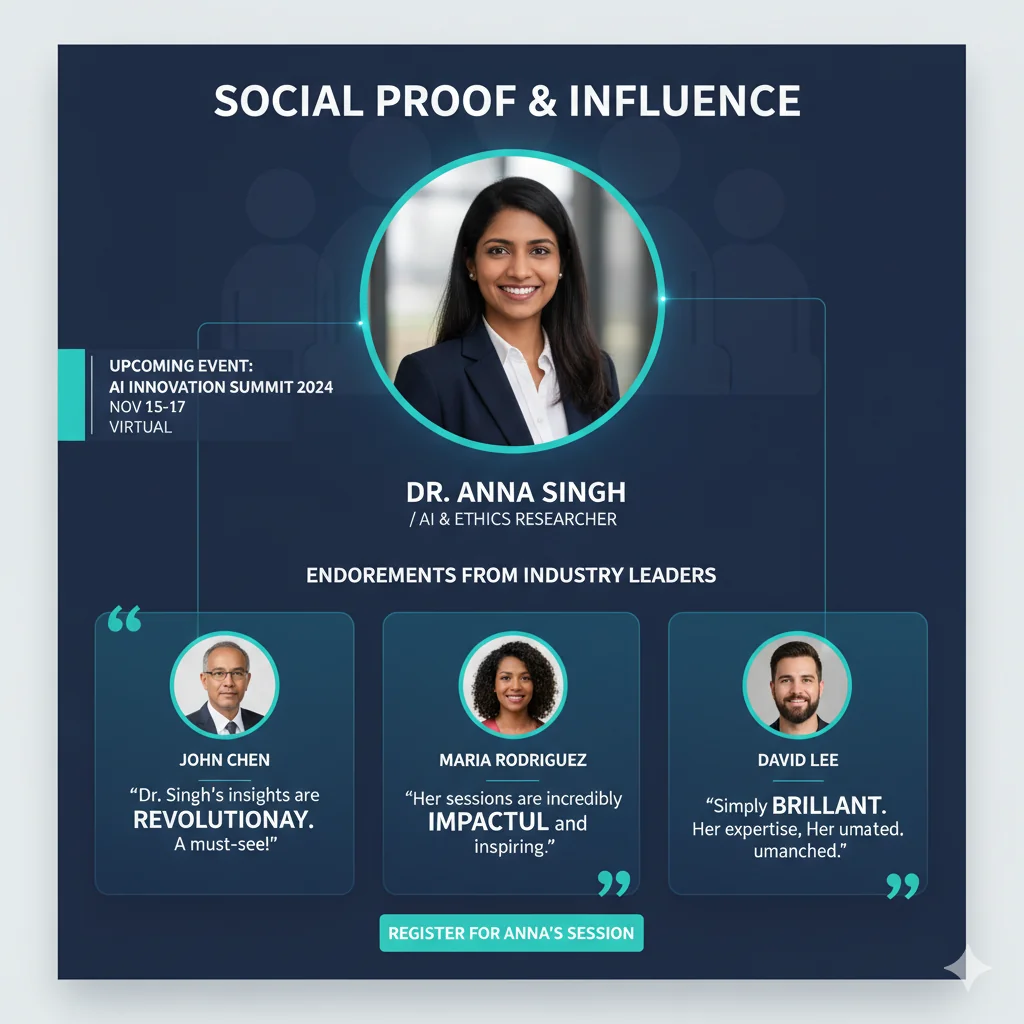
12. Social Proof and Influence
We are strongly influenced by the actions of others, assuming that if many people are doing something, it must be the right thing to do. This principle can be used to build trust and encourage desired behaviors.
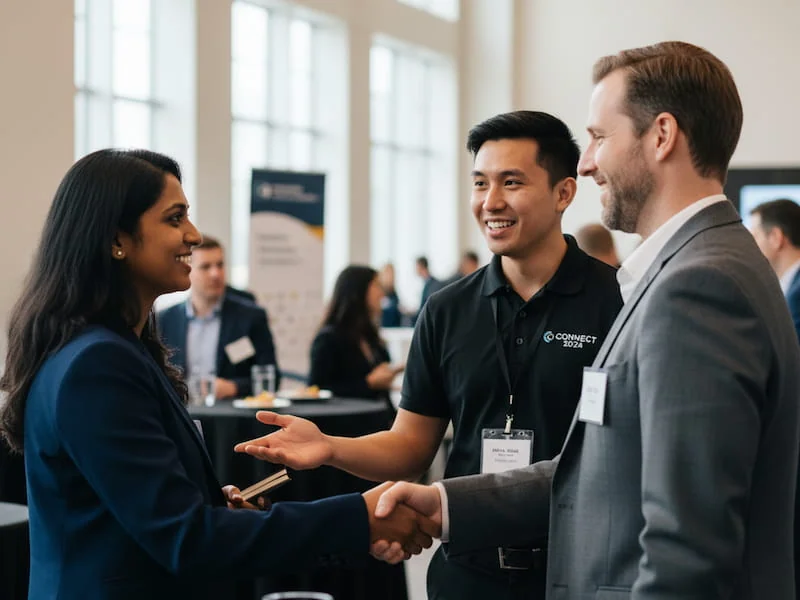
13. Curated Introductions
Use an event team to personally introduce two attendees with similar interests or goals to kickstart networking.
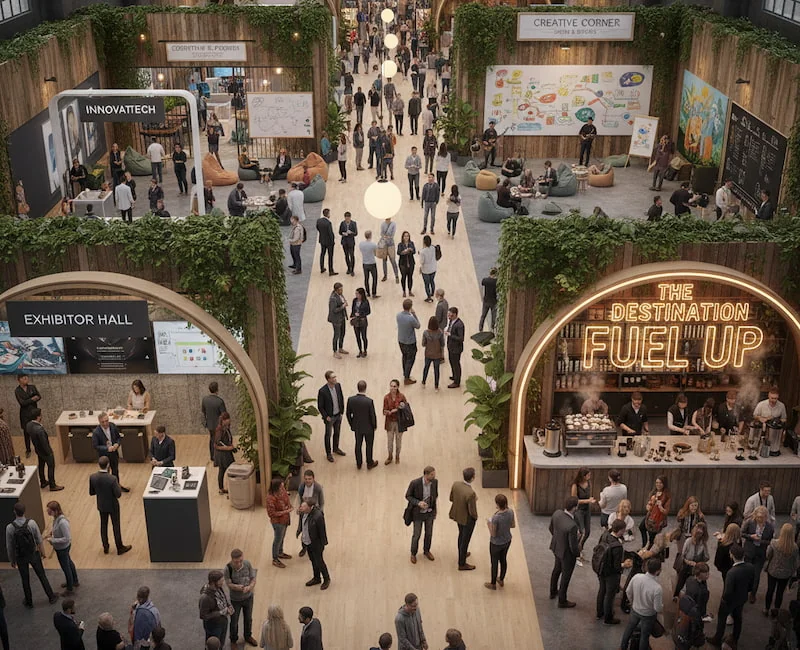
14. Create a "Journey"
Structure the event so that attendees have to move through different zones to get to a popular feature (like a coffee bar), increasing the chance they'll see and interact with other areas.
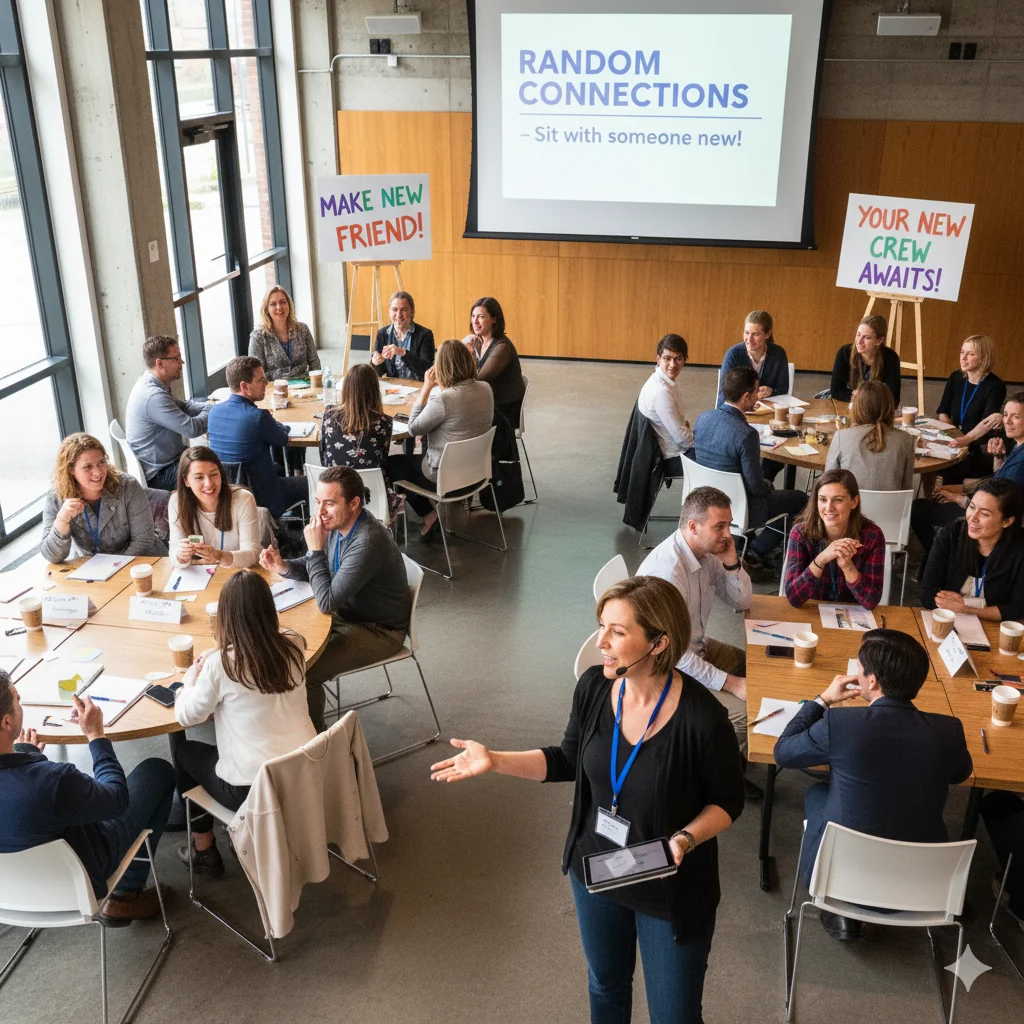
15. Randomized Seating
In a session, encourage or even randomize seating to break up pre-existing groups and force new connections.